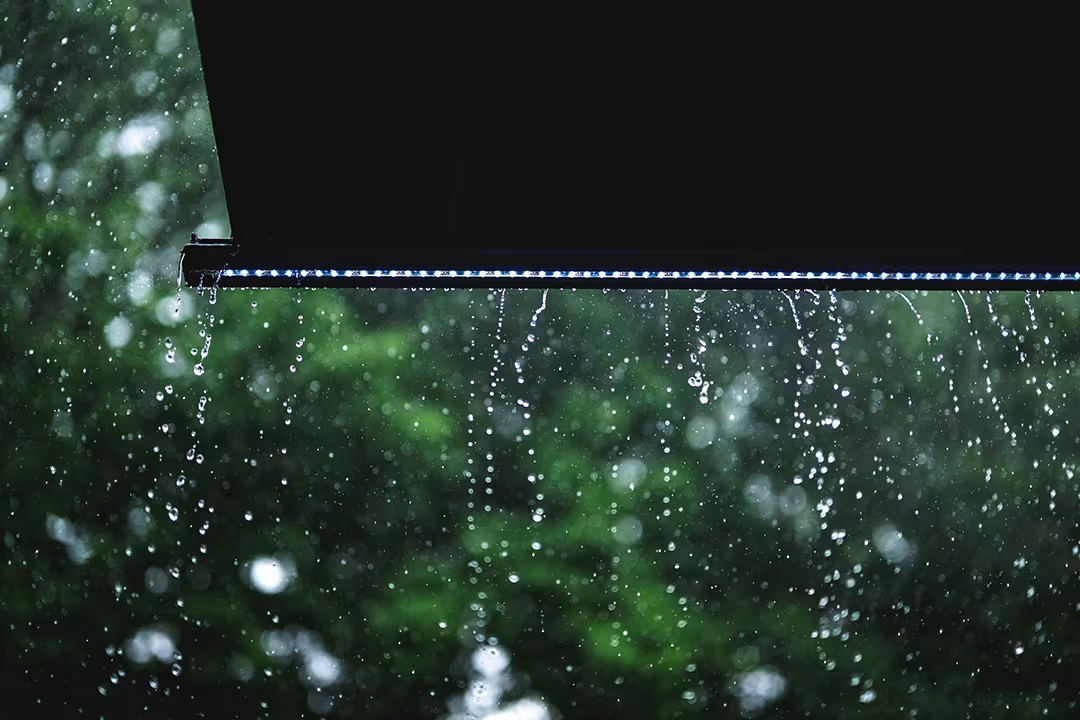
Taking on the Storms
Protect your RV awning by inspecting it regularly and retracting it before strong winds, heavy rain, or storms arrive. Close it whenever you leave the campsite or go to bed, and follow the operating instructions for your specific model. Weather awareness and timely retraction matter more than relying on straps, anchors, or automatic features.
Start With a Seasonal Awning Inspection
Before extending your awning for the first time each season, inspect the accessible hardware and mounting points. If everything appears sound, extend it according to the manufacturer’s instructions and check the fabric and remaining components.
Look for:
- Tears, frayed stitching, or worn fabric
- Loose or missing mounting fasteners
- Bent or damaged support arms
- Debris around the roller or moving components
- Corrosion or unusual wear
Stop if the awning binds, moves unevenly, or shows damage that could affect operation. Have the problem assessed before continuing to use it.
Awning arms and roller assemblies can contain spring-loaded components. Follow the maintenance instructions and leave repairs involving those components to a qualified technician.
Monitor Weather Before and During Use
Check the forecast before extending your awning, then stay aware of conditions while it is open. Enable weather alerts on your phone, especially when storms are possible.
Wind gusts can arrive before rain or dark clouds. Moving branches, flapping fabric, or changing wind direction are reasons to reassess conditions—not reliable measurements of a safe operating limit.
Follow any weather limits specified by the awning manufacturer. Do not apply a universal wind-speed threshold to every awning.
If storms are approaching, retract early while conditions still allow safe operation.
Retract Before Leaving or Going to Bed
Make closing the awning part of your departure and bedtime routines, even when the forecast looks clear.
Retract it:
- Before leaving the campsite
- Before going to sleep
- When wind begins increasing
- Before heavy rain, hail, snow, or storms arrive
Tie-downs and anchors do not make an awning safe to leave extended during severe weather. If your model has an automatic wind or vibration sensor, treat it as a supplemental feature rather than a substitute for monitoring conditions.
Use Rain Pitch Only as Directed
Some awnings have adjustable pitch or a rain-dump feature that helps water run off during permitted light-rain use. Others have different restrictions.
If your manufacturer allows pitch adjustment, follow its instructions for lowering the appropriate end and maintaining clearance from the entry door. Keep the runoff area clear of people and equipment.
Do not allow water to collect on the fabric. A pitch setting or rain-dump feature does not make an awning suitable for heavy rain.
Before retracting, return adjustable arms, knobs, or supports to the positions required by your model. Do not assume every awning can retract with its pitch settings unchanged.
Keep Accessories Compatible and Clear of Moving Parts
Shade screens and lighting can make the campsite more comfortable, but accessories must be compatible with the awning and installed as directed.
Avoid adding unsupported weight to the arms or roller. Before retracting, remove or disconnect accessories wherever their instructions require it.
Keep people, pets, furniture, and loose equipment clear while the awning moves. Use the extension position and locking procedure specified for your model rather than assuming all manual and power awnings operate alike.
Clean and Store the Fabric Properly
Remove loose debris before rolling the awning up. Clean the fabric using the products and methods approved by its manufacturer.
Allow it to dry before extended storage whenever possible. If weather requires you to retract it while wet, reopen it to dry when conditions are safe.
Address stains, mildew, or damaged stitching using the fabric manufacturer’s guidance. Harsh cleaners and aggressive scrubbing can damage some materials or finishes.
Use a Simple Campsite Departure Checklist
Before heading out or turning in for the night:
- Retract the awning.
- Confirm it is fully closed.
- Secure any required locks or travel hardware.
- Store or secure loose outdoor items.
- Check weather alerts for other campsite precautions.
Before towing, include the awning in your exterior walkaround and confirm that all required travel restraints are secured.
Visit Keystone RV’s Owner Support for more seasonal maintenance guidance.